top of page

2.9. The HPA Axis
Overview
The HPA axis is the abbreviation for the hypothalamic-pituitary-adrenal axis. It is a circuit than runs between the hypothalamus, the pituitary gland, and the adrenal glands on top of the kidneys. These structures communicate with each other using a variety of hormones. Overall, the HPA axis is vital to the regulation of the homeostatic state of the body. For example, the HPA in part regulates metabolism by affecting the action of the thyroid hormones and cortisol. Let’s take a look at the various parts of the HPA axis and see how they communicate with each other.
From the Hypothalamus to the Pituitary Gland
The hypothalamus and pituitary gland are parts of the diencephalon (see Section 2.1. Overview of the Brain). The hypothalamus has lots of nuclei that are responsible for producing ‘releasing’ hormones. These ‘releasing’ hormones then travel a short distance through a portal system of blood vessels to the pituitary gland. To help understand this better, let’s take an example. Corticotropin releasing hormone (CRH) is secreted from the hypothalamus and flows into the anterior pituitary gland. When CRH arrives here, it stimulates the secretion of another hormone, called adrenocorticotropic hormone (ACTH), into the main circulation.

From the Pituitary Gland to the Adrenal Cortex
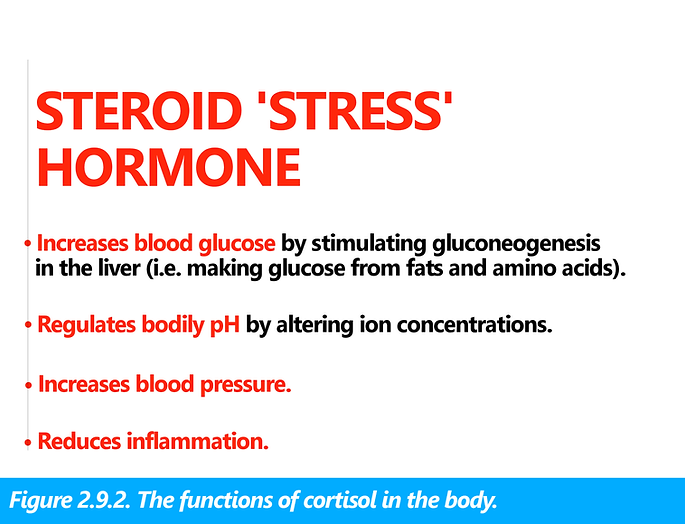
ACTH travels in the main circulation to the adrenal glands (sometimes these are called the suprarenal glands). There are two parts to the adrenal glands – the outer cortex and the inner medulla. ACTH arrives here and stimulates the production of a steroid hormone called cortisol. Cortisol then flows into the main circulation and is responsible for a number of body-wide effects, including increasing blood pressure, increasing blood glucose and increasing blood amino acid levels. But why would we need these body-wide effects? Well, cortisol is a ‘stress hormone’ that is secreted in response to fight or flight situations, trauma and infection. In these instances, the body wants to increase the blood pressure and the amount of glucose available for respiration to ensure survival. One way to increase blood glucose is to make glucose from amino acids in the liver – this process is called gluconeogenesis.
Once the cortisol has circulated and the blood pressure has been increased, etc, negative feedback takes effect. This means that the hypothalamus detects the increased cortisol level and, as a result, stops producing CRH, and therefore the adrenal glands stop producing cortisol. Now everything has returned to its default level.
Other hormones that are secreted by the anterior pituitary in response to activity in the hypothalamus include:
Once the cortisol has circulated and the blood pressure has been increased, etc, negative feedback takes effect. This means that the hypothalamus detects the increased cortisol level and, as a result, stops producing CRH, and therefore the adrenal glands stop producing cortisol. Now everything has returned to its default level.
Other hormones that are secreted by the anterior pituitary in response to activity in the hypothalamus include:
- Thyroid stimulating hormone
- Growth hormone
- Prolactin
- Gonadotropes (i.e. FSH and LH which regulate ovulation)
Clinical Top Tip:
Pituitary Tumour
A pituitary tumour, or adenoma, is a tumour that grows on the pituitary gland. It is usually benign (non-cancerous) and classed as either ‘functional’ or ‘non-functional’. A functional pituitary tumour arises from the hormone-producing cells of the pituitary gland and will secrete an excess amount of a particular pituitary hormone (e.g. a prolactinoma secretes excess prolactin), whereas a non-functional pituitary tumour has no effect on hormone secretion. Diagnosis is through blood tests (measuring the hormone level) and an MRI scan, and treatment can involve medication or transsphenoidal surgery (i.e. endoscopic surgery through the nose).
Related Video
Related Video
bottom of page